


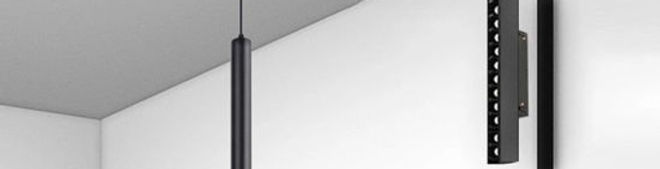
48V vs 230V Track Lighting
Choosing the Right Rail System for Modern Architectural Lighting
Track lighting has been a reliable solution in architecture and retail for decades. Traditionally, most systems operated on 230V mains voltage, but modern lighting design increasingly adopts 48V low-voltage rail systems.
Both technologies have their place, but they serve different design strategies, installation requirements, and architectural goals.
What is 230V Track Lighting?
A 230V track lighting system runs directly on the mains electrical voltage used in most buildings. These systems have been widely used in retail stores, showrooms, galleries, and residential interiors.
The luminaires connect directly to the powered rail and do not require external drivers or transformers.
Advantages of 230V Track Lighting
• Strong light output for large spaces
• Simple electrical infrastructure
• Compatible with many standard luminaires
• Ideal for large retail areas and warehouses
• Long-established industry standard
Because of its robustness and power capacity, 230V rail lighting is often used for general lighting in commercial spaces.
What is 48V Track Lighting?
A 48V rail system uses low voltage supplied through an integrated power driver. This allows much smaller luminaires, cleaner designs, and greater flexibility in lighting layouts.
Many modern systems use magnetic rails, where fixtures simply snap into the track and immediately receive power.
Advantages of 48V Track Lighting
• Compact and elegant luminaires
• Magnetic installation for easy repositioning
• Safe low-voltage operation
• Ideal for architectural and design-driven spaces
• Easy integration into furniture and display cases
Because of these benefits, 48V systems are widely used in museums, high-end retail, hospitality projects, and residential interiors.
Key Differences Between 48V and 230V Rail Systems
Design Flexibility
48V systems allow much smaller fixtures and more minimalistic rail profiles.This makes them ideal for design-focused environments.
230V systems often require larger fixtures due to the internal components needed to handle mains voltage.
Installation
230V rail systems connect directly to the building’s electrical system and are generally installed by electricians.
48V rail systems use a driver that converts mains voltage to low voltage, making them easier to integrate into furniture, display cases, and architectural elements.
Safety
Low-voltage 48V systems offer an additional safety advantage, especially when integrated into custom interiors or accessible installations.
Lighting Precision
Modern 48V spotlights often use high-performance optics, allowing precise accent lighting with very compact luminaires.
This makes them ideal for:
museum lighting
jewelry displays
product highlighting
art galleries

When to Choose 230V Track Lighting
230V systems remain a strong solution for projects that require powerful lighting across large areas.
Typical applications include:
• supermarkets
• large retail stores
• warehouses• showrooms
• commercial spaces with high ceilings
These environments often prioritize light output and coverage over design minimalism.
When to Choose 48V Track Lighting
48V systems are ideal when lighting must integrate seamlessly into the architecture.
Common applications include:
• museums and galleries• jewelry stores• luxury retail• hospitality environments• residential interiors• display cases and shelving systems
These projects benefit from precision lighting, flexibility, and elegant design.
The Future of Architectural Lighting
While 230V track lighting remains an industry standard for large commercial environments, 48V rail systems are rapidly becoming the preferred choice for design-driven architecture.
Their combination of flexibility, modularity, and minimalistic aesthetics makes them ideal for modern interiors.
At LEDw@re, both technologies play an important role.Our portfolio includes professional 230V rail systems for powerful lighting as well as advanced 48V magnetic rail systems for architectural applications.
This allows designers and architects to choose the system that best fits their project.